
Draft — pending verification by Sanifix. This page carriesnoindex until it is reviewed and published.
Butt Fusion vs Electrofusion HDPE Jointing in Malaysia


 MSBS EN
Talk to our technical team +603-87062522 WhatsApp onlineshop@sanifixhardware.com
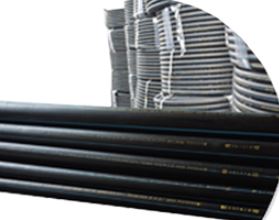
Two ways to make one kind of joint
HDPE pressure pipe is joined by melting the polyethylene and letting it fuse into one continuous material. Unlike a mechanical or compression joint, a fused joint has no seal ring to age, leak, or be installed wrongly — when done to procedure it is as strong as the pipe wall.
Both methods covered here are fusion methods:
- Butt fusion welds the pipe ends directly to each other.
- Electrofusion welds the pipe ends into a factory-made coupler or fitting that contains an embedded heating coil.
That difference drives everything else — what equipment you need on site, how much trench you must open, and where each method is cheapest to install.
How butt fusion works
The pipe ends are clamped in the machine, faced flat and parallel, then pressed against a heated plate until the faces melt. The plate is removed and the two ends are pressed together under controlled force while the joint cools. The visible result is a uniform double bead around the joint.
What it needs on site:
- A butt fusion machine sized to the pipe diameter — from small manual clamps up to hydraulic machines on the large mains.
- Power for the heater and hydraulics (typically a site generator).
- Working space: the pipe ends must be pulled into the machine and moved together, so the trench has to be opened wide enough at each joint.
- A trained operator — the cycle is controlled, but set-up, facing, and cooling discipline are the operator’s job.
Butt fusion is the workhorse for long, straight water mains where joints are few and the run is open. Pipe supplied to MS ISO 4427 / BS EN 12201 in PE100 is the usual feedstock; the 20–50 mm OD pressure range we publish is in our HDPE PE100 dimension table.
How electrofusion works
An electrofusion coupler or fitting — straight coupler, reducer, saddle, tapping tee, or branch — has a heating coil moulded into it. The pipe surfaces are scraped clean of the oxide layer, the pipe is marked and inserted to depth, the fitting is clamped, and the electrofusion machine runs a controlled cycle that melts the PE and fuses fitting to pipe. The machine logs the cycle, which gives you a joint record without extra paperwork.
What it needs on site:
- An electrofusion machine and a generator or battery source sized to the fitting.
- Clean, dry pipe ends and a proper oxide scrape — this is the step most often skipped, and the one that causes the most failures.
- Little more than the pipe length itself: electrofusion works in pits, valve chambers, and short trenches where a butt fusion machine physically will not fit.
Because each joint carries its own fitting, electrofusion is the standard answer for branches, service connections, and repairs on an existing line. It is also how most small-diameter and confined-site fusion gets done.
Which to choose: a selection table
| Job condition | Butt fusion | Electrofusion |
|---|---|---|
| Long straight main, open trench | First choice — few joints, fast | Works, but fitting cost per joint adds up |
| Large diameters | First choice | Couplers get expensive and heavy |
| Tight pits, valve chambers, short trenches | Machine will not fit | First choice |
| Branches, tees, service connections | Requires fabricated tee pieces | First choice — factory EF tees and saddles |
| Repair or tie-in to an existing line | Only with a cut-out length | First choice |
| Many small discrete joints across site | Slow to mobilise per joint | First choice — fast per joint |
| Joint quality records | Manual log / datalogger option | Automatic cycle log per joint |
Malaysian tender context
On water reticulation and JKR/SPAN-facing work, the jointing method is part of the approved method statement, not a site convenience. Two things matter at procurement time:
- Buy the jointing capability, not just pipe. If your tender is long open mains, the butt fusion machine and operator cost belongs in your pricing. If it is a dense network of branches and service connections, budget for electrofusion fittings and a machine with battery power.
- Test after fusion. Completed lines are pressure-tested to the project specification — the fusion procedure has to survive that test, which is why procedure discipline, not weld strength, separates good contractors from call-backs.
Fusion jointing procedures for PE are covered by ISO 21307 (butt fusion) and the fitting manufacturer’s certified electrofusion instructions — confirm the current revision with your consultant or the authority having jurisdiction before you write it into the method statement.
- Jointing method named in the method statement (butt fusion and/or electrofusion).
- Fusion standard and manufacturer’s procedure cited.
- Machine calibrated and sized to the diameter and power available.
- Electrofusion oxide-scrape and depth marks on every joint.
- Cooling times respected before backfill.
- Pressure test on the completed line per project specification.
- HDPE pipe and fittings ordered to the same PE grade and PN/SDR rating.
Order the HDPE pressure pipes and pressure systems you intend to fuse from certified stock — matching pipe, grade, and rating from one supplier removes one more variable from the jointing process.