
Draft — pending verification by Sanifix. This page carriesnoindex until it is reviewed and published.
Data Centre Electrical Conduit Supply in Malaysia


Talk to our technical team +603-87062522 WhatsApp onlineshop@sanifixhardware.com
The electrical scope on a Malaysian data centre
A Malaysian data centre’s electrical containment splits into two very different worlds:
- Above ground (fit-out scope). Cable tray, trunking, ladder rack, and steel conduit inside substations, corridors, and data halls. This is usually a specialist containment supply; the pipe-side scope covered here is the conduit and sleeve work — drops through slabs, riser protection, and exposed runs where mechanical damage rules out bare tray.
- Below ground (civil/build-up scope). The buried duct network: TNB HV/MV intake ducts from the intake substation, MV/LV runs between transformer and genset yards, and telecom/fibre entry ducts. This is where HDPE corrugated cable pipe, GI conduit sleeves, and warning tape live — and where this guide focuses.
The buried scope is the procurement risk. It sits on the critical path for energisation, it is driven by utility requirements rather than the consultant’s preferences, and it is unforgiving of late orders — you cannot re-open a backfilled road crossing because a duct fitting is still on a boat.
HDPE corrugated cable pipe vs GI conduit
The two workhorse materials answer different problems:
HDPE corrugated cable pipe is the default for buried duct banks. It is flexible, comes in long coils (fewer joints, faster pulling), and its corrugated wall gives ring stiffness for burial at a fraction of steel’s weight. Use it for TNB/Telekom duct runs, fibre entries, and any buried run where the utility specifies an HDPE duct system.
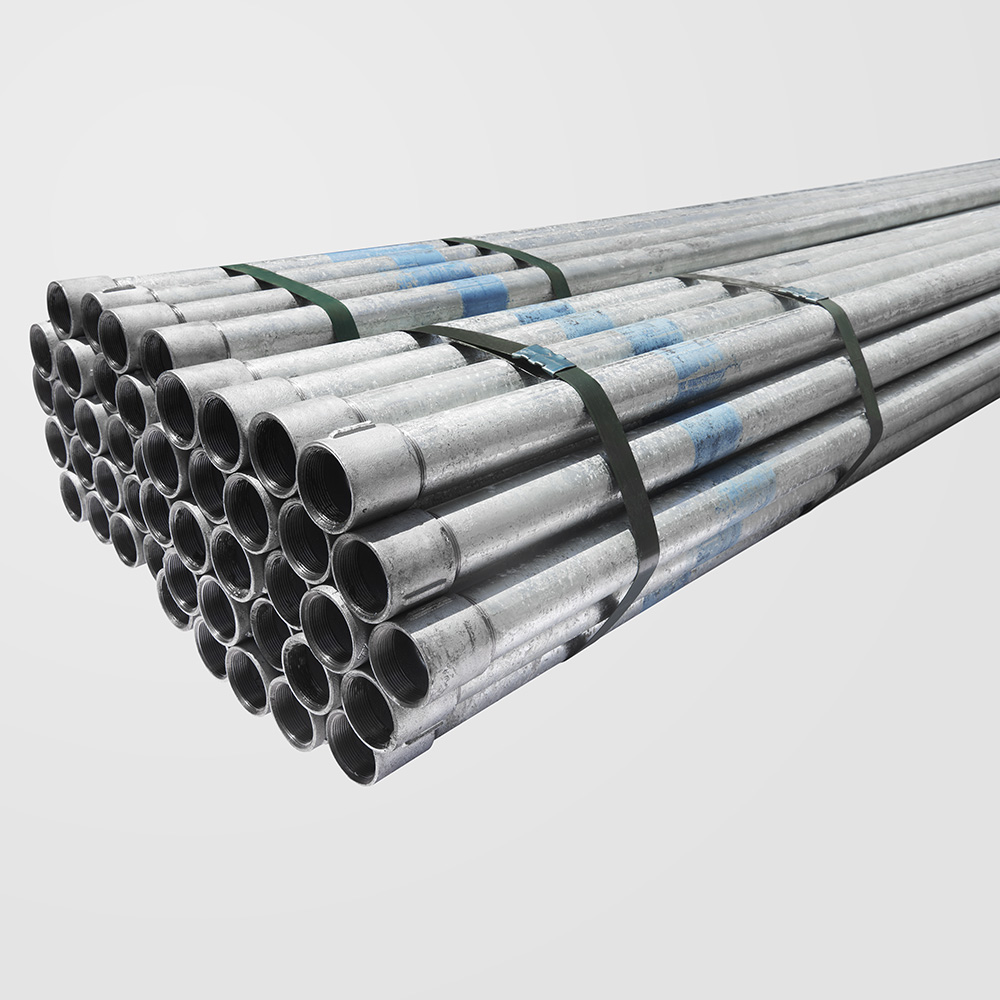
GI conduit and GI pipe sleeves go where the cable needs mechanical protection HDPE cannot give: road crossings and driveways, exposed risers and yard runs, slab penetrations, and anywhere earthing/bonding practice calls for a metallic raceway. Our GI pipe is MIG-MELEWAR to BS EN 10255 — the successor to BS 1387, which many tender documents still cite. See the GI pipe spec table for the series system (Light/Medium/Heavy), colour-band markings, and material properties as published by the manufacturer. Where a per-size wall schedule is needed for the submittal, ask with your quotation — the full manufacturer dimension table is being sourced.
A practical rule: buried and straight → HDPE duct; crossing, exposed, or bonded → GI. Many DC routes use both on the same run, transitioning at chambers.
Warning tape and locatability
Every non-metallic duct you bury is invisible to the next contractor’s cable locator. On a live DC campus — where later fit-out phases, utility tie-ins, and facility works will dig around your ducts for years — that is how cables get struck.
The practice that survives contact with reality: lay warning tape 300–500 mm above the duct, and use detectable tape (aluminium-core) on non-metallic ducts so the run can be traced from the surface before excavation. Plain printed tape is acceptable where the utility’s practice allows it or the ducted cable is itself traceable. The full selection logic is in our article on detectable tape vs plain tape — the short version is that tape is the cheapest insurance in the entire containment package.
Utility compliance context (TNB / Telekom)
Utility duct requirements are not universal. TNB and telecom scopes can specify duct colour, stiffness/ring class, wall type, and jointing method — and the requirements differ between distribution and transmission work, and between regions. Treat any colour or stiffness figure you hear on site as provisional until it is confirmed against the utility’s current requirement for your scope. We supply to your confirmed requirement; we do not guess the utility’s spec on your behalf — confirm with the utility or the authority having jurisdiction before ordering.
For the wider compliance picture on underground cable protection, see the Electrical & Telecom Protection hub.
Specification checklist
- Trench route schedule issued (routes, lengths, crossings, chambers)
- Duct size, stiffness, and colour confirmed per utility scope (TNB / telecom)
- GI conduit series (Light/Medium/Heavy) and end finish stated per spec line
- Fittings and couplers matched to the pipe system on the same order
- Warning tape type per run — detectable on non-metallic ducts
- Road-crossing and slab sleeves captured in the first delivery
- Certification / test documentation requirements confirmed in writing
Buying containment as one package
Sanifix stocks HDPE corrugated cable pipes and HDPE corrugated cable fittings, G.I. pipes (15–350 mm, BS EN 10255), and warning tape — send your trench schedule and duct sizes and we will quote pipe, fittings, and tape as one package, sequenced to your trench programme. For the fire-side equivalent of this procurement logic, see data centre fire-fighting piping; the data centre hub covers all four trade packages.