
Draft — pending verification by Sanifix. This page carriesnoindex until it is reviewed and published.
Data Centre Cooling & Chilled-Water Piping in Malaysia


Talk to our technical team +603-87062522 WhatsApp onlineshop@sanifixhardware.com
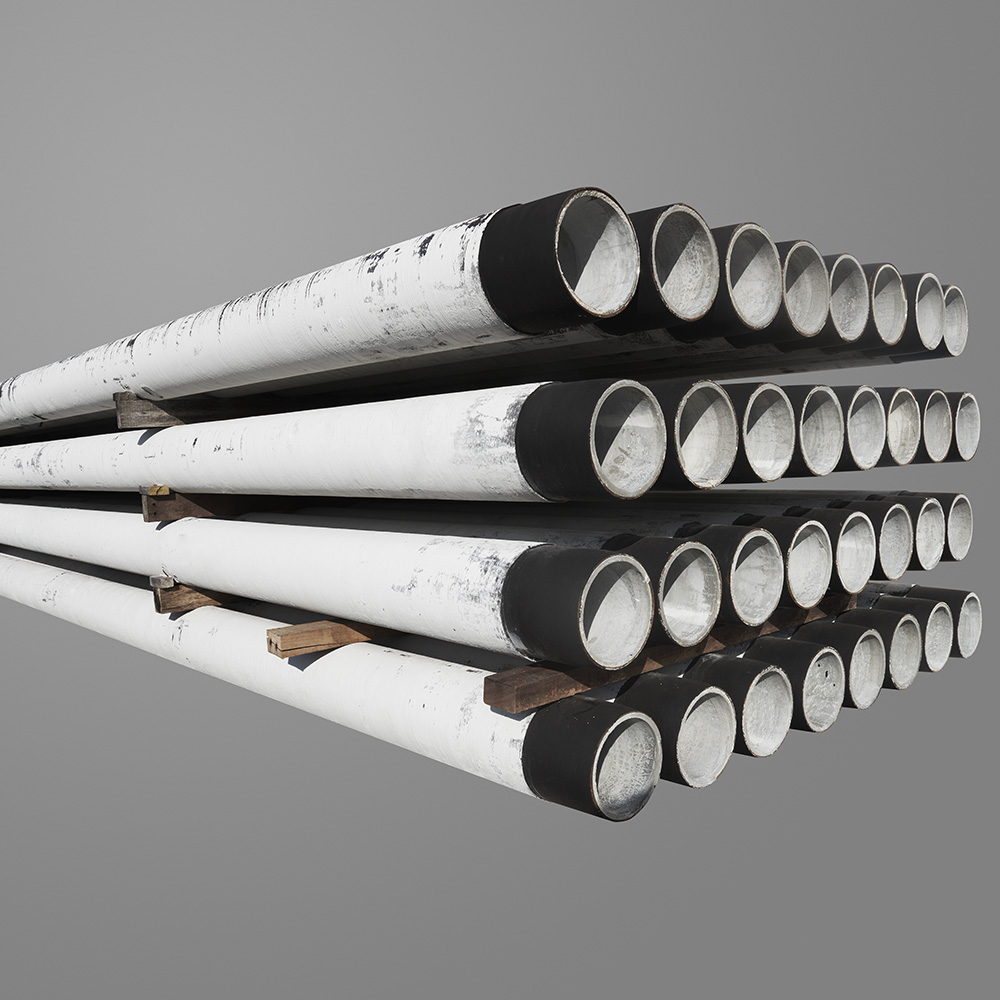
Chilled-water vs condenser-water loops
A DC cooling plant runs two main water loops, and they are not the same duty:
- Chilled water (CHW) — the closed loop between chillers, CRAH/CRAC units, and any rear-door or in-row coolers. Treated water, modest temperatures, and a premium on cleanliness: debris in a CHW loop ends up in a coil or a control valve, not a sump.
- Condenser water — the open loop between chillers and cooling towers. Higher temperatures, atmospheric exposure at the tower, water treatment chemicals, and far harsher corrosion conditions.
Both loops are conventionally welded steel pipework in Malaysian DC practice. What differs is the corrosion allowance, treatment regime, and insulation requirement the consultant writes against each — which is why the pipe schedule reads differently line by line even when the pipe on the rack looks identical.
Material selection: black welded steel vs GI
Black welded steel pipe is the default for closed CHW and condenser loops: it welds cleanly, takes grooved couplings, and is the economic choice at the diameters these loops run. Black pipe in a closed, treated loop corrodes slowly; the system lives or dies on water treatment, not on galvanising.
GI (galvanised iron) pipe appears where the specification calls for corrosion protection on exposed or auxiliary lines — drain and vent lines, outdoor auxiliary runs, and services the consultant wants zinc-protected. Our GI is MIG-MELEWAR to BS EN 10255; the GI spec table carries the series system and material properties as published. GI and black steel are not interchangeable on a spec line: welding burns off galvanising at the joint, so a GI line that gets welded has a corrosion weak point exactly where it matters. If the spec says GI, joint it threaded or grooved as specified.
Jointing is the real decision. Grooved couplings install fast, need no hot work, and allow re-work without cutting — the usual choice on congested plant rooms and tight fit-out programmes. Welded joints are cheaper in materials and permanent, but cost you hot-work permits, NDT/weld inspection load, and speed. Flanged joints go where equipment must be removed — pumps, chillers, strainers, valves. Most DC loops are a deliberate mix: grooved for the long runs, flanged at equipment, welded where the spec or economics say so. Confirm the jointing method per line with the consultant before procurement — changing method mid-job invalidates your submittal.
Standards context — confirm the current revision
Malaysian tender documents for steel water pipework commonly reference BS EN 10255 for the smaller welded tube sizes; older documents still cite BS 1387, which BS EN 10255 superseded — generally satisfied by BS EN 10255 material, but confirm with the consultant before submittal. For larger bores and pressure-service tube, specifications may cite the BS EN 10216 (seamless) or BS EN 10217 (welded) families. These are named here as context only: the cited standard, its revision, and any project-specific schedule (wall class, test pressure, end preparation) must be confirmed against the project specification with the consultant. We supply to the confirmed requirement and state the standard and revision in our quotation.
For large-bore plant and header work that crosses into waterworks territory, our MSCL range is SIRIM-certified to SPAN TS 21827 — see the MSCL spec table and the water reticulation hub for that compliance context.
The package around the pipe
Cooling pipework does not commission on pipe alone. The accessories are what the pressure test and the balancing contractor actually wait on:
- Valves — gate and butterfly for isolation, check valves at pump discharge, balancing points per the design. Flanged patterns dominate at these diameters.
- Strainers — ahead of chillers, pumps, and control valves. A missing strainer is a fouled coil in month one.
- Flexible joints / expansion provisions — at pump and chiller connections to isolate vibration and take up movement.
- Air vents, drains, and test points — small lines, often GI or stainless, that gate the pressure test and flushing programme.
These are long-lead and specification-bound items. Treating them as a “second wave” order is the classic way a cooling package slips.
Where Malaysian DC cooling is heading
Two currents are reshaping cooling pipework scope in Malaysia. Water-stress scrutiny on new DC approvals is pushing designs toward recycled-water and hybrid cooling strategies, which changes condenser-loop metallurgy and treatment assumptions. And direct-to-chip / liquid cooling for high-density halls is adding a new piping scope — coolant distribution units, manifolds, and stainless or engineered-polymer secondary loops — alongside the traditional CHW plant. Neither trend changes the procurement rule: the pipe is the easy part; the specification, the jointing method, and the accessory package are where schedules are won or lost.
Specification checklist
- Loop duty confirmed per line (CHW closed / condenser open)
- Material per spec line (black welded steel / GI) — no substitution without concession
- Cited standard and revision confirmed with the consultant
- Jointing method per line (grooved / welded / flanged) in the submittal
- Valves, strainers, flexible joints on the same PO as the pipe
- Insulation and cladding compatibility noted (CHW sweating)
- Pressure-test and flushing plan aligned with delivery sequence
Buying the cooling package from Sanifix
Sanifix supplies black welded steel pipes, G.I. pipes, flanged valves — gate, butterfly, check, strainers, and stainless steel pipes & fittings for DC cooling packages. Send your pipe schedule and valve list for a package quotation — we flag long-lead items immediately and sequence deliveries to your pressure-test programme. The fire-fighting package shares much of the same black-steel scope: see data centre fire-fighting piping, or start from the data centre hub.